


If you run a small or medium-sized business in the UK, there will likely come a point where you need funding to move forward. It might be for new equipment, extra stock, a larger premises, or simply to keep cashflow steady during a busy period.
When that moment comes, one of the first questions many business owners ask is:
Should I choose a secured business loan or an unsecured business loan?
Both options can work well, but they suit different situations. In this guide, we explain the difference in plain English, look at the pros and cons of each, and help you decide which type of funding could be right for your business.
How common is borrowing for UK SMEs?
Borrowing is a normal part of running and growing a business. According to the latest SME Finance Monitor, around 45% of UK SMEs used some form of external finance, including loans, overdrafts, and credit cards.
Many businesses borrow relatively modest amounts. In fact, a large proportion of SMEs using finance have total borrowing of under £25,000, often for working capital, stock, or short-term investment.
At the same time, larger secured facilities are still widely used, especially when businesses are funding property, vehicles, or long-term projects.
The key point is that borrowing is not unusual. The important thing is choosing the right type of loan for your situation.
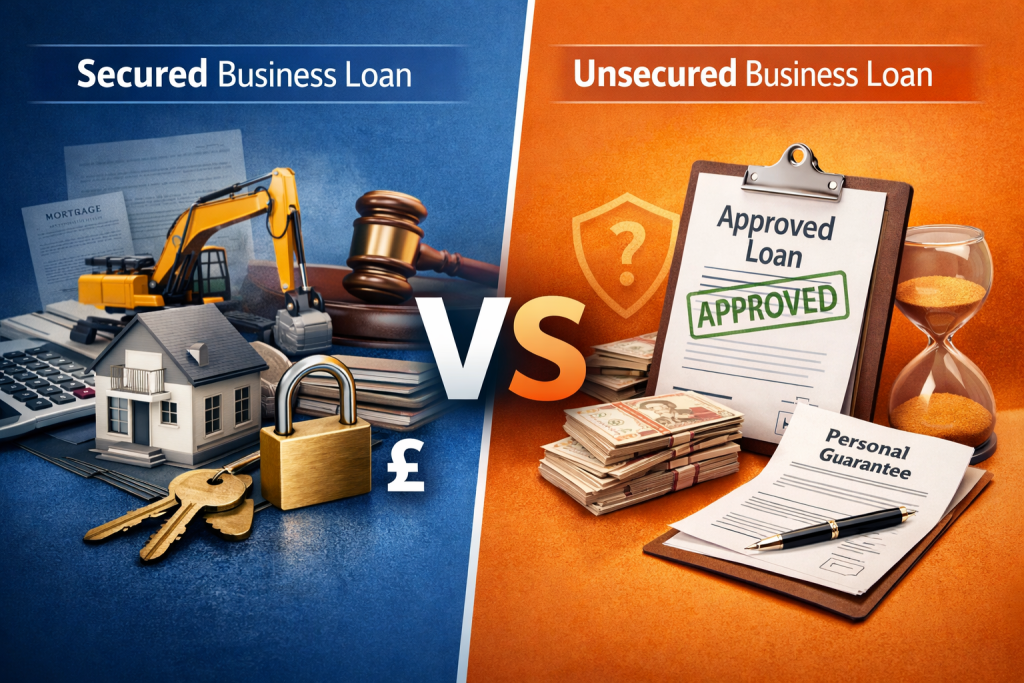 Secured vs unsecured loans: the simple difference
The main difference comes down to whether the loan is backed by an asset.
Secured business loan
A secured loan is backed by collateral. This means the lender takes security over an asset, such as property, equipment, vehicles, or other business assets. If the loan is not repaid, the lender may have rights over that asset.
Because the lender has this extra security, secured loans can sometimes offer larger amounts, longer terms, or lower interest rates.
Unsecured business loan
An unsecured loan does not require business assets to be used as collateral. Instead, the lender looks more closely at affordability, trading history, and credit profile.
Many unsecured loans still involve a personal guarantee, which means the business owner agrees to be personally responsible for the debt if the business cannot repay it.
If you want to explore this type of funding in more detail, you can read more about
unsecured business loans and how they work for UK SMEs.
What does “security” actually mean?
Security can take different forms depending on the lender. This might include:
- A charge over business property or equipment
- A charge over company assets
- A debenture covering multiple assets
- A personal guarantee from a director
Security is not automatically good or bad. It simply changes the balance of risk between the lender and the borrower. In many cases, more security means better terms, but it can also increase the consequences if things go wrong.
Advantages of secured business loans
Secured loans are often used for larger or longer-term projects.
Lower rates in some cases
Because the lender has security, the risk may be lower. This can sometimes lead to better interest rates or longer repayment periods.
Larger borrowing amounts
Secured loans can make it possible to borrow more, especially when funding property, machinery, or major expansion.
Longer repayment terms
Longer terms can reduce monthly repayments, which can help with cashflow when the investment takes time to pay off.
Suitable for asset-based investments
If you are buying something that will deliver value over several years, such as equipment or premises, secured finance can match the life of the investment.
Disadvantages of secured business loans
Secured lending can be useful, but it comes with responsibilities.
Assets may be at risk
If the loan cannot be repaid, the lender may have rights over the secured asset.
More paperwork and time
Secured loans often involve valuations, legal work, and extra checks, which can make the process slower.
Less flexibility
If an asset is used as security, you may need the lender’s agreement before selling or refinancing it.
Can affect future borrowing
Once assets are pledged as security, it may limit your options for additional finance later.
Advantages of unsecured business loans
Unsecured loans are popular with SMEs because they are usually simpler and quicker.
No business asset required
You do not need to put property or equipment up as security, which can feel less risky for many business owners.
Faster to arrange
Without asset valuations or legal charges, unsecured loans can often be approved more quickly.
Good for smaller or short-term funding
Unsecured loans are often used for:
- cashflow support
- stock purchases
- marketing spend
- covering tax bills
- short-term opportunities
Keeps future options open
Because no asset is pledged, you keep more flexibility for future borrowing.
Disadvantages of unsecured business loans
Unsecured borrowing can be very useful, but it may come with higher costs.
Interest rates can be higher
Without security, lenders may charge more to reflect the extra risk.
Loan sizes may be smaller
Unsecured facilities are often used for smaller amounts or shorter terms.
Personal guarantees are common
Even if the loan is unsecured, the lender may require a personal guarantee. This means you could be personally responsible if the business cannot repay the loan.
When a secured loan may be the better choice
Secured finance is often used for:
- buying or refurbishing premises
- purchasing vehicles or machinery
- funding long-term expansion
- consolidating larger debts
- major business investments
In these cases, a longer-term loan backed by assets can make the repayments more manageable.
 When an unsecured loan may be the better choice
Unsecured finance is often suitable when speed and flexibility matter.
Common uses include:
- working capital
- covering short-term cashflow gaps
- buying stock
- funding marketing campaigns
- urgent repairs or opportunities
- paying VAT or corporation tax
Because unsecured loans can often be arranged quickly, they are a popular choice for growing businesses.
How to decide which is right for you
If you are unsure which option to choose, these questions can help:
- What are you funding, and how long will it deliver value?
- How much can you comfortably repay each month?
- Are you willing to offer security?
- Do you need the money quickly?
- What is the total cost of the loan, not just the rate?
- Is there a personal guarantee involved?
The best choice is usually the one that supports your plans without putting unnecessary pressure on the business.
Getting the right advice makes a difference
Every business is different, which is why there is no single “best” type of loan.
A secured facility might suit one company, while an unsecured loan may be the better option for another. The key is looking at the purpose of the funding, the timeline, and the level of risk you are comfortable with.
If you would like to explore your options, take a look at our guide to
unsecured business loans or speak to the Match Finance team to discuss what could work for your business.
Disclaimer: This article is for general information only and does not constitute financial advice. All finance is subject to status and affordability checks.

- Secured vs Unsecured Business Loans: What’s the Difference and Which Should You Choose? - March 18, 2026
- How to Get Quick Business Loans When You Need Them Most - February 24, 2026
- High-Growth Businesses and Borrowing - January 5, 2026